The Hardest Part of Running a Central Kitchen Isn't Production
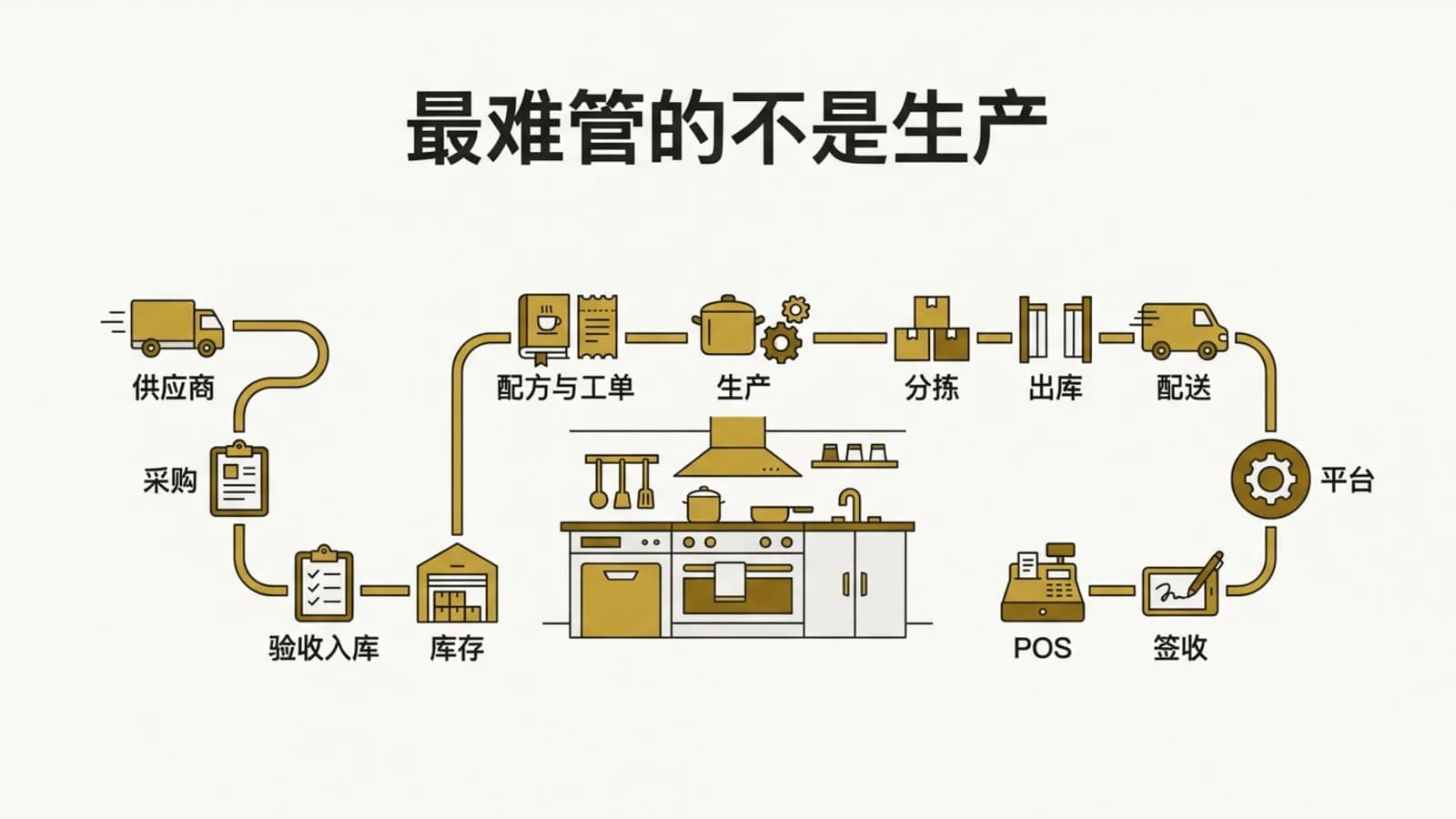
A lot of F&B owners assume that once their central kitchen is up and running, the hardest part will be "cooking fast enough."
But once things are actually running, you find out the harder questions are: Where did this purchase come from? Was the goods receipt right? Did the kitchen follow the standard recipe? How much went into production? Did picking short-ship anything? Was the pre-dispatch QC check actually recorded?
If all of that lives across WeChat groups, paper dockets and Excel sheets, then as you add outlets it all boils down to one line: we're busy every single day, but nobody can really explain what happened.
1. Purchasing and receiving: lock down the source first
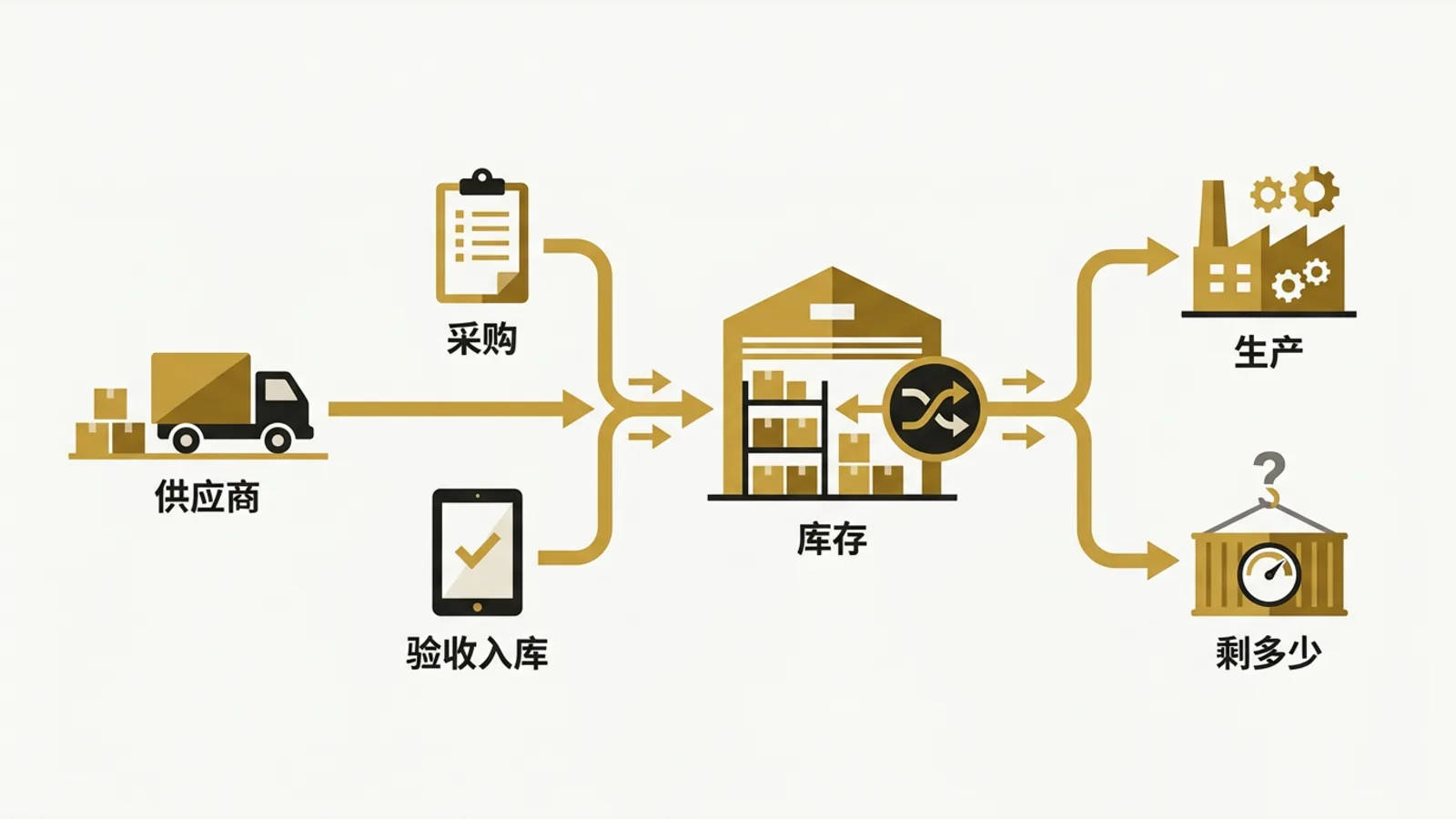
Central kitchen chaos usually doesn't start on production day. It gets baked in much earlier, at purchasing and goods receipt.
In MakanCloud, the central kitchen flow starts recording from suppliers, purchase orders and goods receipt. Once deliveries are received, they go into inventory, so when you later ask how much production used and how much is left, there's an actual source to trace back to.
This fixes a very real problem: owners don't want to spend every day asking "Who received this batch? How much came in? Why doesn't the stock count match?"
2. Recipes and work orders: less reliance on memory
Most growing F&B teams go through the same phase: everything runs smoothly while your key chefs are around, but once people change, new outlets open or volume goes up, things start drifting.
MakanCloud links BOM recipes to production work orders. The recipes aren't there to box chefs in. The point is to put standard quantities, production tasks and what actually got made on the same line.
For a central kitchen, this matters even more than inventory on its own. Inventory only tells you "how much is left." Recipes and work orders tell you "how it should have been used, and why you're short."
3. Picking, weighing and temperature checks: make dispatch clear
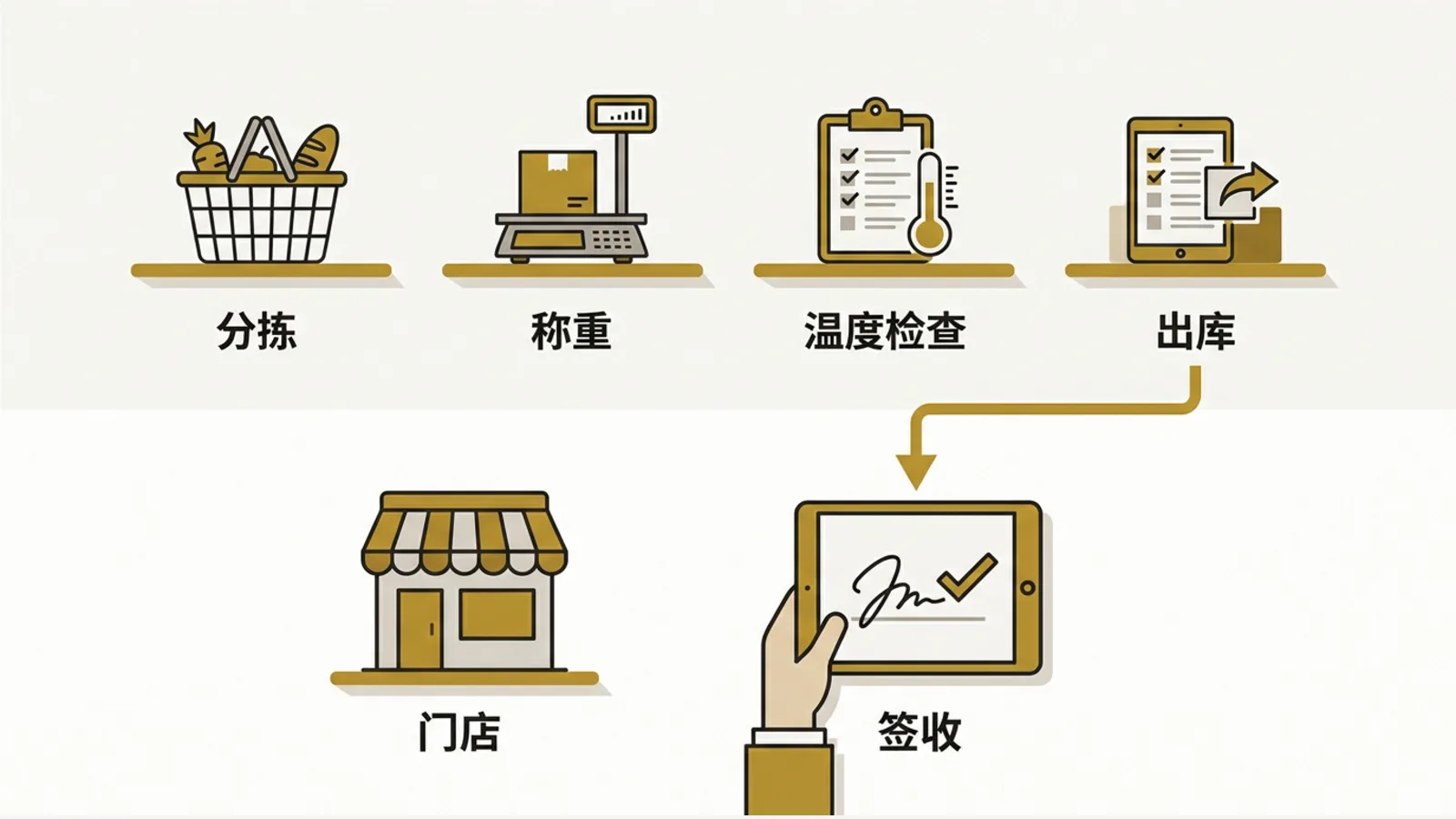
When a central kitchen ships to outlets, the classic dispute goes: did the kitchen short-ship, or did the outlet short-receive? Was it a picking mistake, or did nobody double-check before dispatch?
MakanCloud builds pick-and-weigh verification and temperature checks right into the dispatch flow. That one extra record before goods go out isn't meant to add work for the outlets. It's there so you spend less time arguing later.
For teams moving chilled goods, semi-finished items or pre-prepared food, these records also make QC traceability much cleaner.
4. Why it all belongs on one platform
If purchasing sits in one system, inventory in a spreadsheet, production in Excel, deliveries in a drivers' chat group and POS in yet another tool, then what the owner ends up with isn't operational data. It's a pile of fragments that someone has to explain by hand.
MakanCloud is built as an end-to-end F&B operations platform: from the outlet head chef placing an order, through central kitchen production, picking, dispatch, delivery and sign-off, all the way to front-of-house POS, it tries to handle as much of that as possible in one place.
It's a particularly good fit for Chinese restaurant chains and growing F&B teams in Singapore: you've got a central kitchen plus multiple outlets, you're still coordinating over WeChat, paper dockets and Excel, and you can clearly feel reconciliation, wastage and QC traceability getting harder and harder.
One question to close with: in your central kitchen right now, what's hardest to keep track of: purchasing, recipes, production, or dispatch?
If you'd like to see the full flow, a 14-day free Pro trial is a good place to start: https://makancloud.com/register