Why Ordering Through WeChat Groups Leads to Overselling and Books That Never Balance
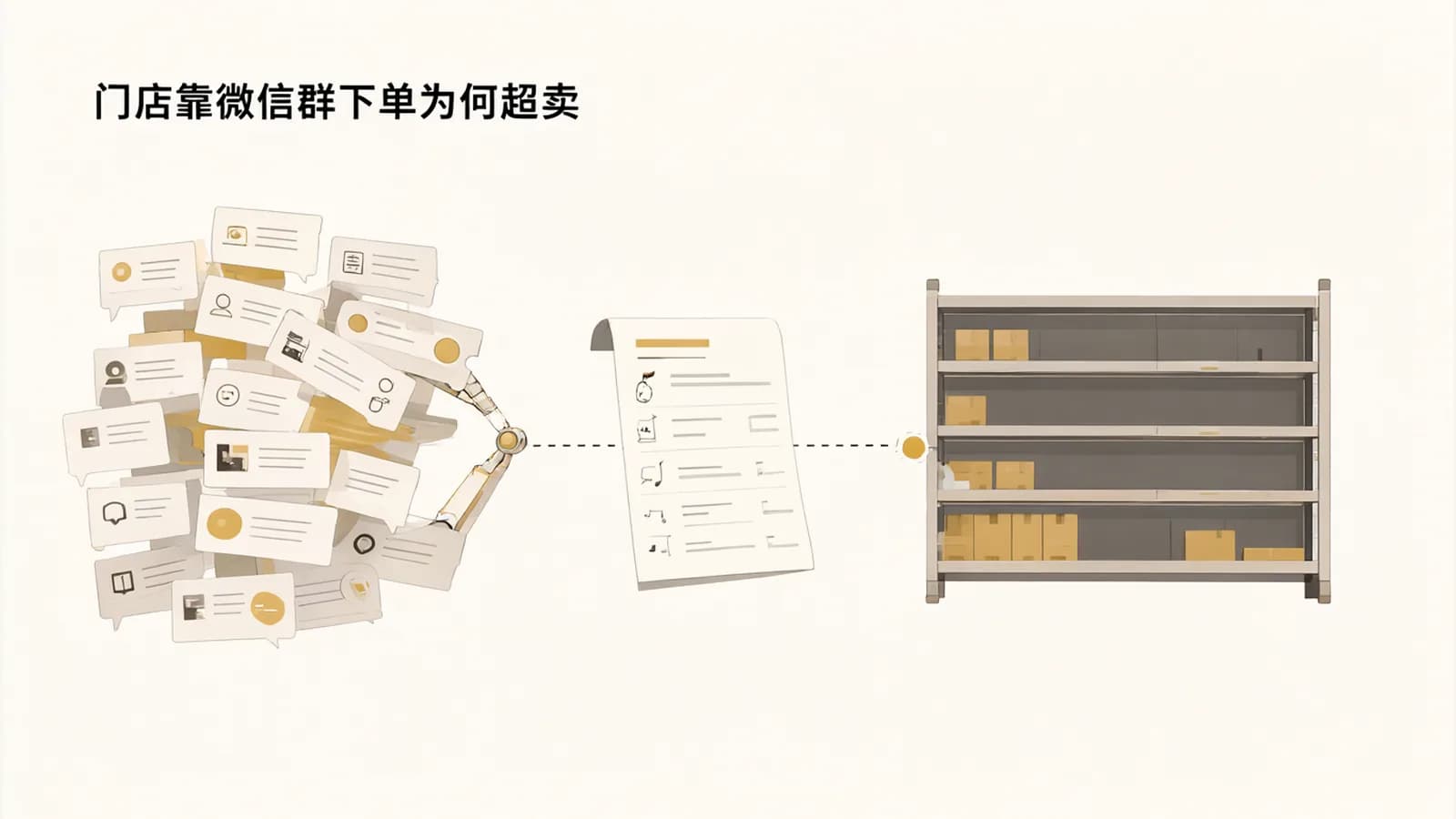
If you've ever run a restaurant chain, you probably know this morning routine: in the central kitchen's group chat, a handful of stores fire off what they need for the day — 'Store A, char siu x20', 'Store B, braised meats x15' — mixed in with leftover threads from yesterday. The head chef copies it all onto paper tickets between stir-fries, then posts back in the group to confirm. Come month-end stocktake, figuring out how much got used, how much went to waste, who over-ordered, and who never actually received their stuff comes down to memory and a stack of crumpled paper.
Nobody's being careless here. These tools just were never built for reconciliation. A WeChat group is a chat app. A paper ticket is a reminder. Neither of them has any idea how much stock you actually have left.
How overselling happens
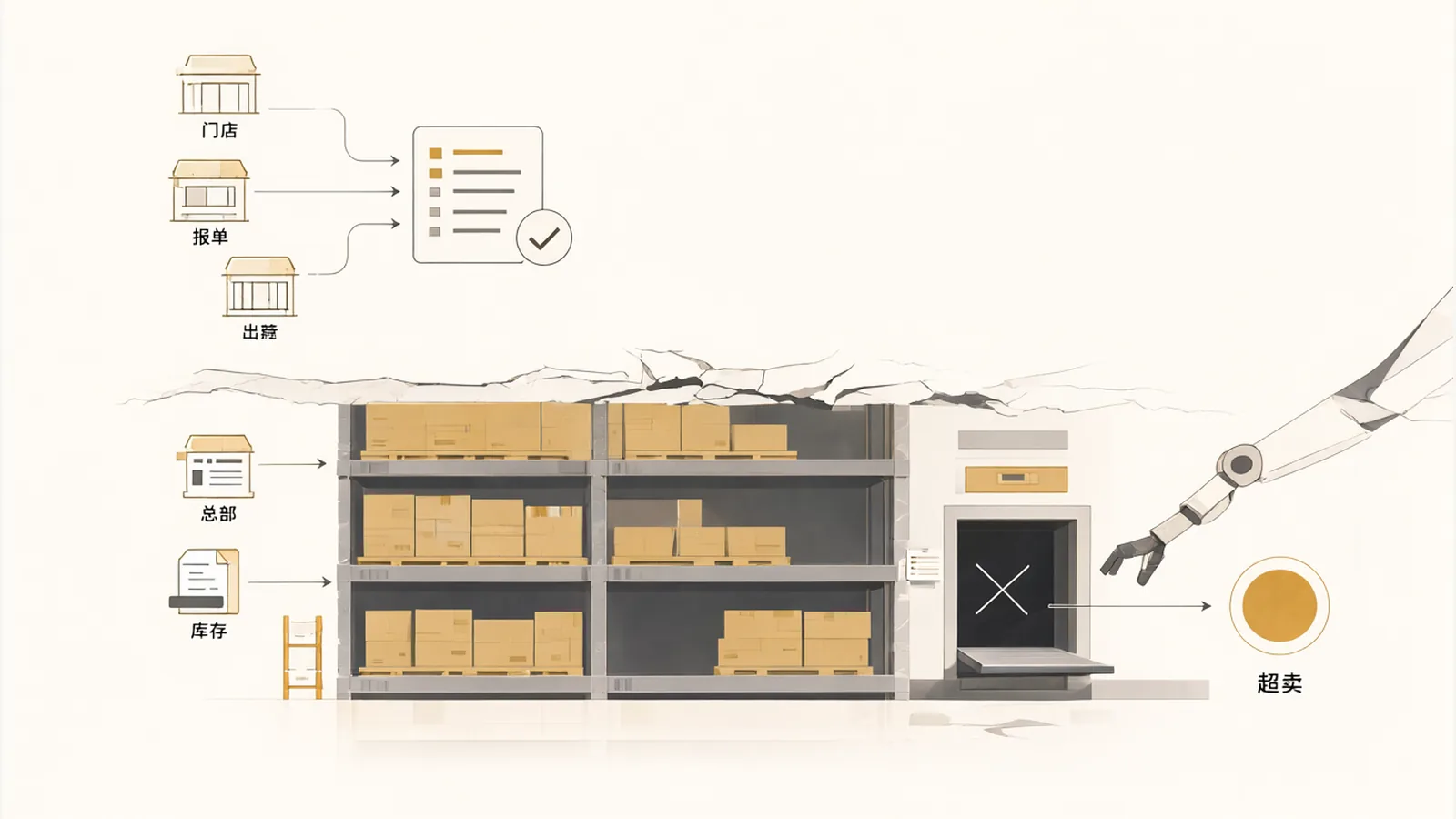
Overselling is pretty much guaranteed: when a store places an order, nobody knows in real time whether the central kitchen still has the goods. HQ says yes based on a gut feeling, and only when it's time to ship does someone realize an ingredient ran out ages ago. So you either cut orders last-minute and throw the stores into chaos, or you push the order out anyway — and of course the books don't add up. The root problem isn't people. It's that 'ordering' and 'inventory' are two things that never talk to each other.
So we rebuilt the whole chain
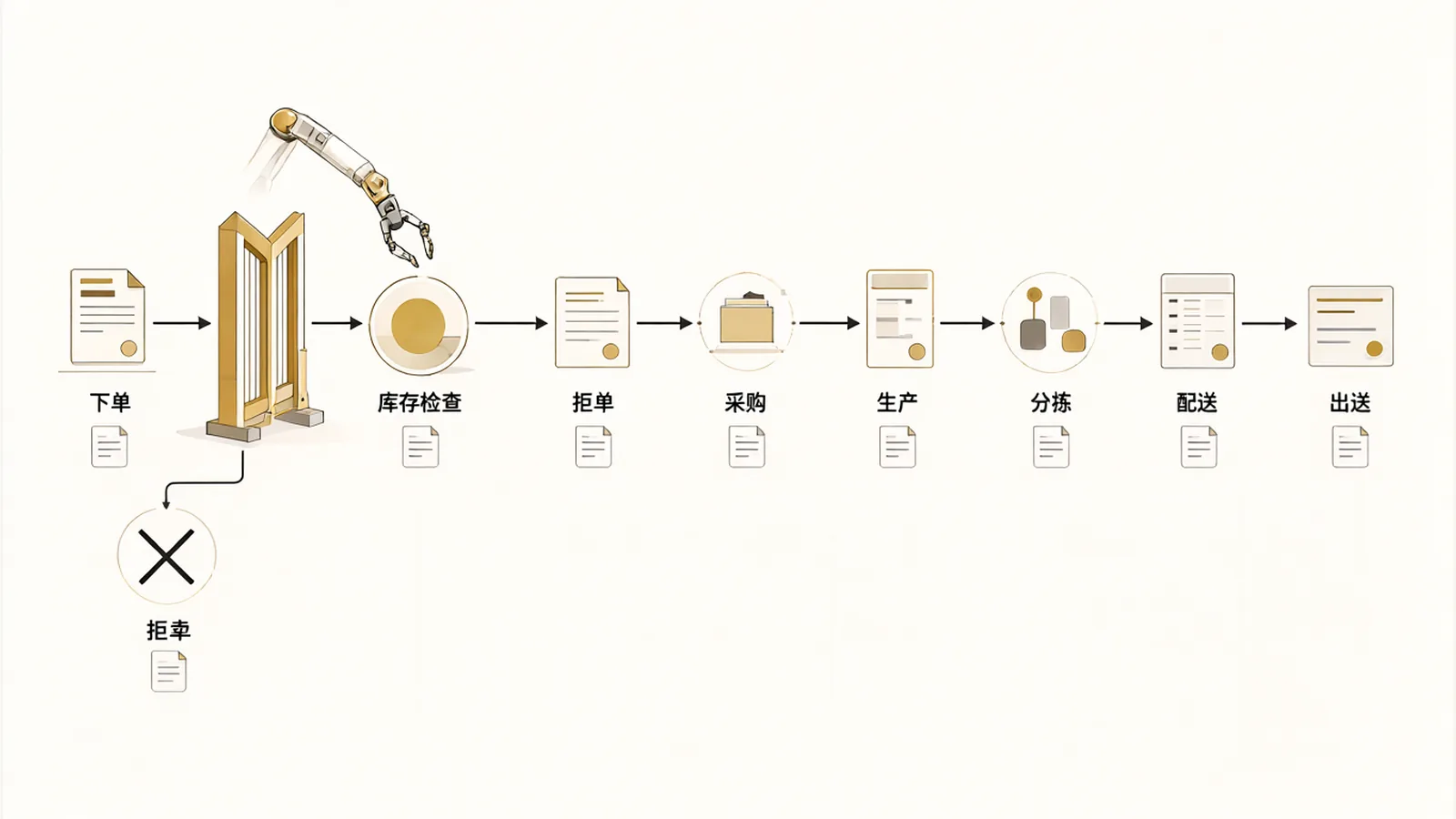
In MakanCloud, the store's head chef first picks 'the store I'm on duty at today', then places the order. The moment HQ confirms, the system runs an automatic inventory check — if there isn't enough, the order gets rejected right there. Overselling is stopped at the source instead of being discovered at dispatch.
More importantly, placing the order is just where the chain starts. From there it's central kitchen purchasing, receiving and stocking, production work orders driven by BOM recipes, picking with weigh-and-verify, temperature checks at dispatch, and finally delivery scheduling and sign-off — all flowing through one platform. Every step leaves a trail, so at month-end you're not scrolling back through chat history; usage and wastage are right there to look up.
The front counter isn't an island anymore
A lot of shops run their POS as a standalone cash register — whatever gets sold doesn't automatically come off back-end inventory. MakanCloud's POS is wired into ordering, inventory, and the central kitchen: table QR ordering goes straight to the KDS and prints station tickets, you can keep taking payments when the internet drops, and once you're back online it syncs automatically without duplicate orders. Whatever the front sells, the back end knows instantly.
Just start using it
MakanCloud starts at SGD 59/month, with a 14-day free trial of the Pro plan — no credit card required. Going from sign-up to open for business takes about 5 minutes of initial setup, and the interface switches between Chinese and English in one click. If your stores are still reconciling through WeChat groups and paper tickets, try running one store on it for a week and see how it goes.
Start your free trial: https://makancloud.com/register
How do your stores place orders with the central kitchen today? Tell us — we'd love to see if we can help.