Why Restaurants That Take Orders Over WeChat Can Never Get the Books to Match
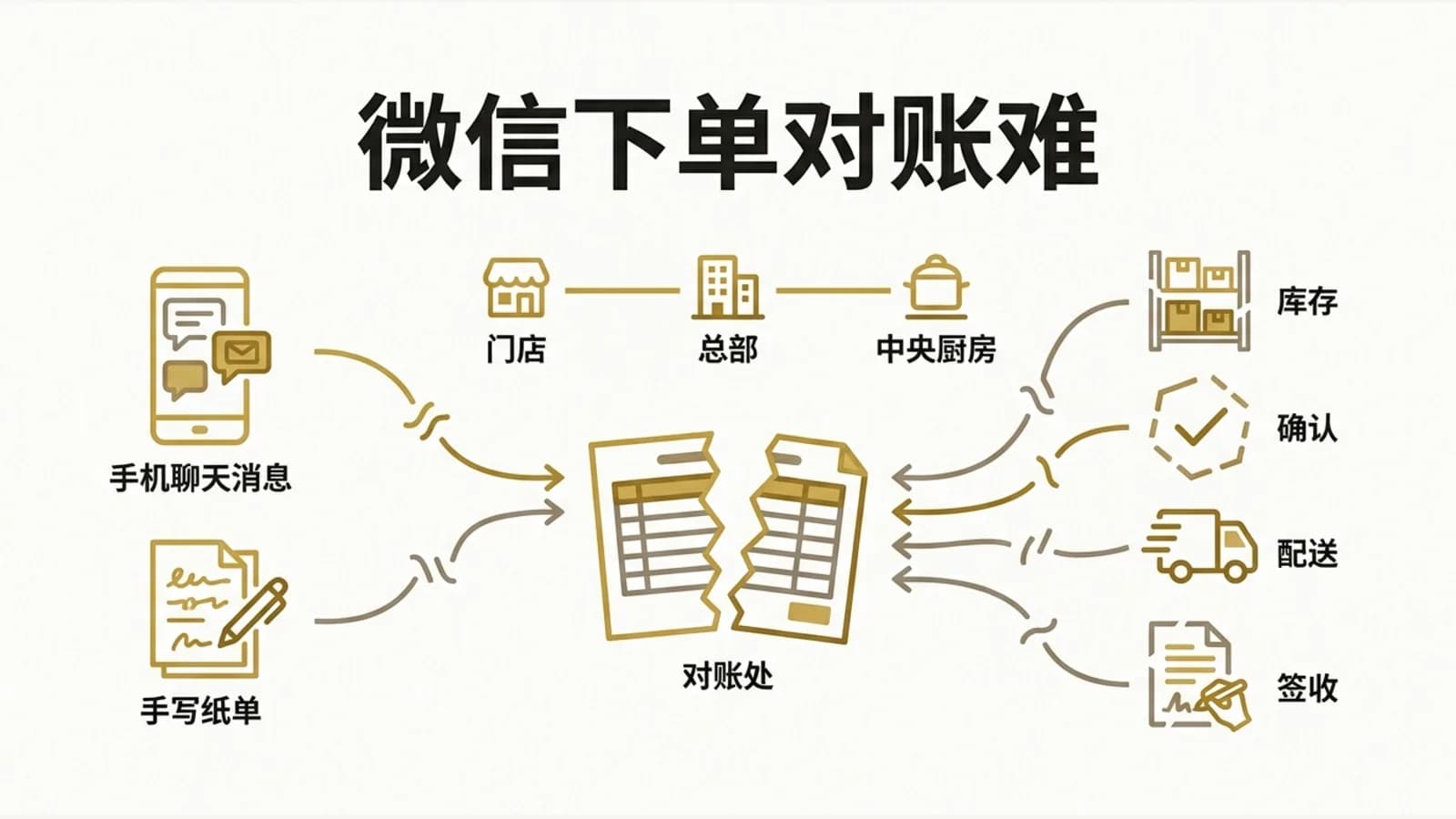
When things get busy, the one question every restaurant owner dreads is: "Wait, who actually confirmed this order?"
A lot of Chinese restaurant chains and growing F&B teams in Singapore start out holding everything together with WeChat groups, paper slips, and Excel: outlets, the central kitchen, and delivery all stitched together by hand. When you're small, people can keep an eye on it. Once you add more outlets, the problems all hit at once. Order records are scattered everywhere, stock checks take too long, and production and dispatch get patched up in the books after the fact. You end up either overselling or staring at numbers that don't reconcile at month-end.
It's not just "staff didn't write it down properly"
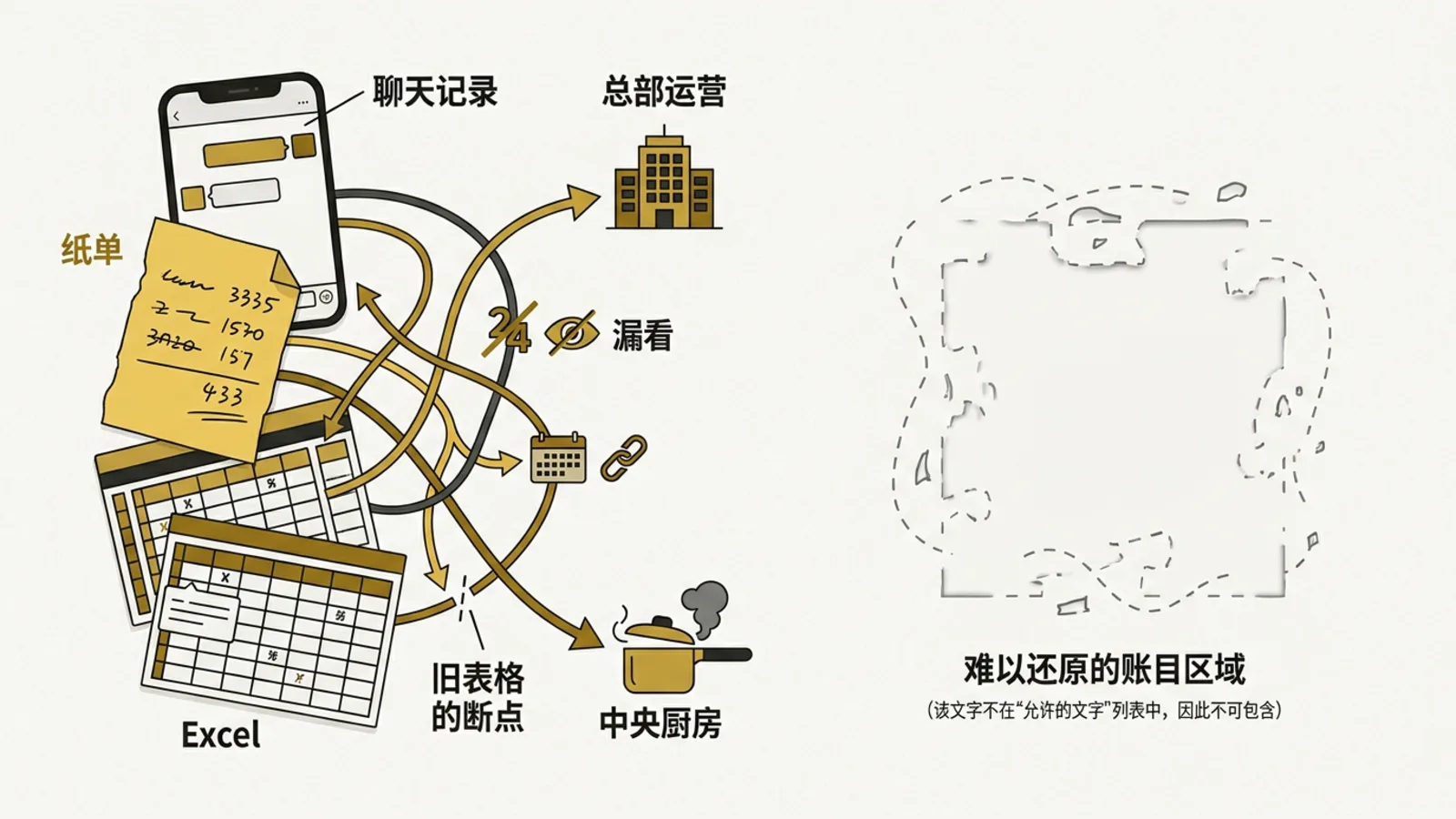
WeChat groups are great for talking. They're terrible for running an order process.
The outlet's head chef posts their order in the group, someone in ops at HQ compiles everything by hand, and then the central kitchen works through it based on stock and the production schedule. All it takes is one person changing a quantity, missing a message, or working off an old spreadsheet, and every step after that goes wrong.
The really painful part is that it's almost impossible to piece together afterwards. Which outlet placed the order? When did HQ confirm it? Was there enough stock at the time? Did anyone double-check the picking? Was the delivery actually signed for? When that information is spread across chat history, paper slips, and Excel, reconciling the books is always going to be a slog.
MakanCloud starts by fixing the "orders and stock don't match" problem
MakanCloud's outlet-to-central-kitchen ordering flow is built for F&B teams running a "central kitchen + multiple outlets" setup.
The outlet's head chef picks "today's on-duty outlet" and places the order. When HQ confirms it, the system runs a stock check automatically, and orders that can't be fulfilled get rejected. So instead of someone accepting the order first and discovering later that there isn't enough stock, the risk gets caught right at the confirmation step.
For owners, the value is pretty straightforward: fewer verbal confirmations and more of a process you can actually trace; less patching up the books after the fact and a clear view of stock at the moment the decision is made.
From ordering to sign-off, all on one platform
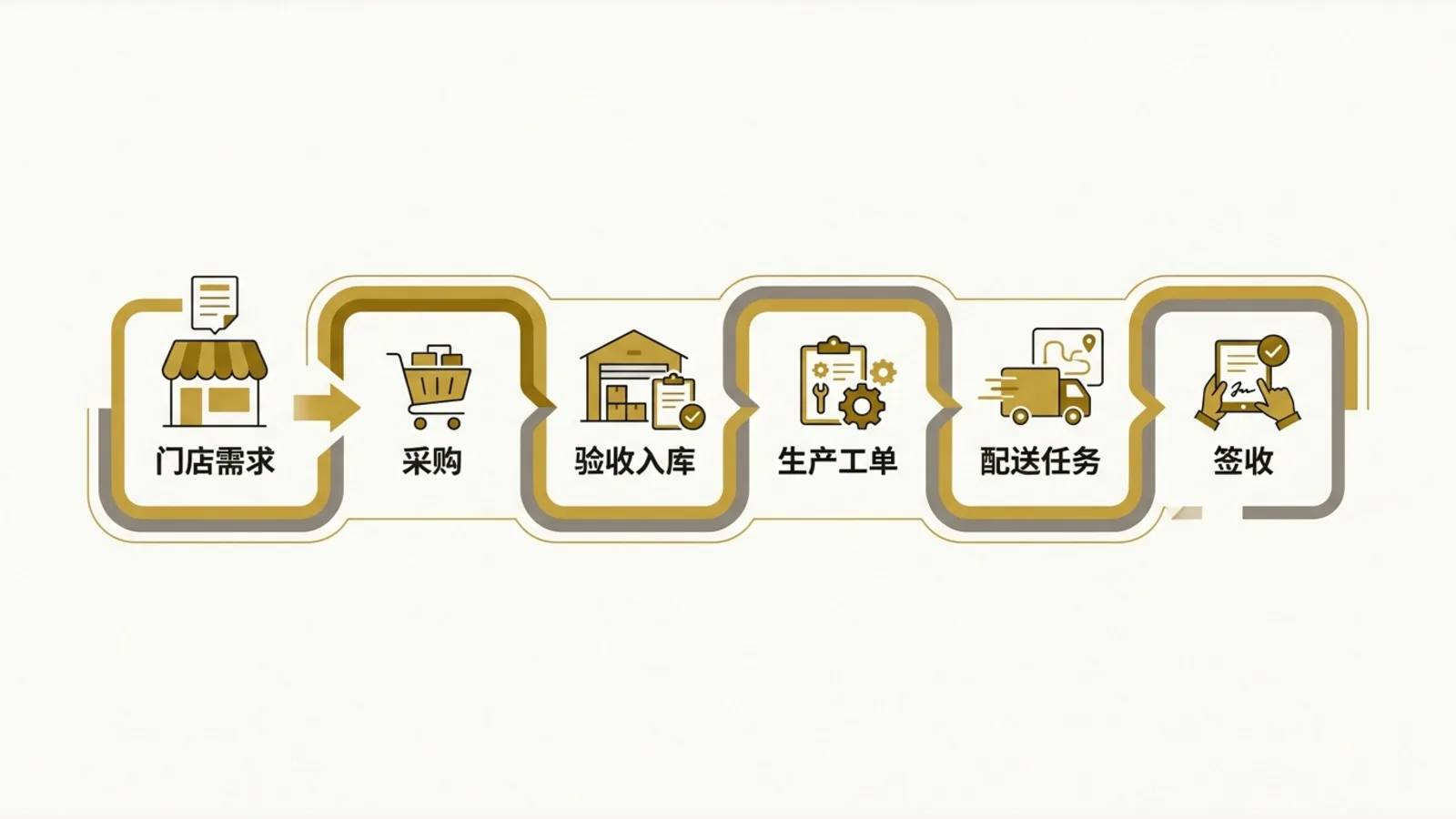
Fixing ordering alone isn't enough, though. Where F&B teams really get tangled up is everything that comes after the order: central kitchen production, picking, dispatch, delivery, and the outlet signing for the goods.
MakanCloud puts the whole central kitchen chain in one place: suppliers, purchasing, goods receiving, BOM recipes, production work orders, picking with weigh-and-verify checks, and temperature checks before dispatch. A dispatch note can be turned into a delivery task in one click, and you can track its status on the delivery dashboard and through a dedicated driver app.
So instead of flipping through a pile of disconnected spreadsheets, the owner sees one operational chain, from what the outlet needs all the way to what actually got delivered.
Your POS stops being a standalone cash register
Plenty of teams want to get a POS, but a traditional POS usually only handles front-of-house checkout and doesn't talk to back-end stock or ordering at all.
MakanCloud's POS lives on the same platform as ordering, inventory, the central kitchen, and delivery. It supports both counter and table-service modes, ordering, payments, receipts, kitchen tickets, shift closing, and GST reports. When the connection is flaky, the POS keeps taking payments offline, then syncs automatically once it's back online, with idempotent replay protection so nothing gets counted twice.
For a multi-outlet restaurant business, the point isn't buying a cash register. It's making sure your orders, stock, kitchen, and accounts are all telling the same story.
If your team is still coordinating orders and reconciliation over WeChat, paper slips, and Excel, start with the part most likely to go wrong: "outlet places order → HQ confirms → stock check". MakanCloud offers a 14-day free Pro trial, no credit card required: https://makancloud.com/register