What Real Projects Taught Me About AI's Long-Term Value
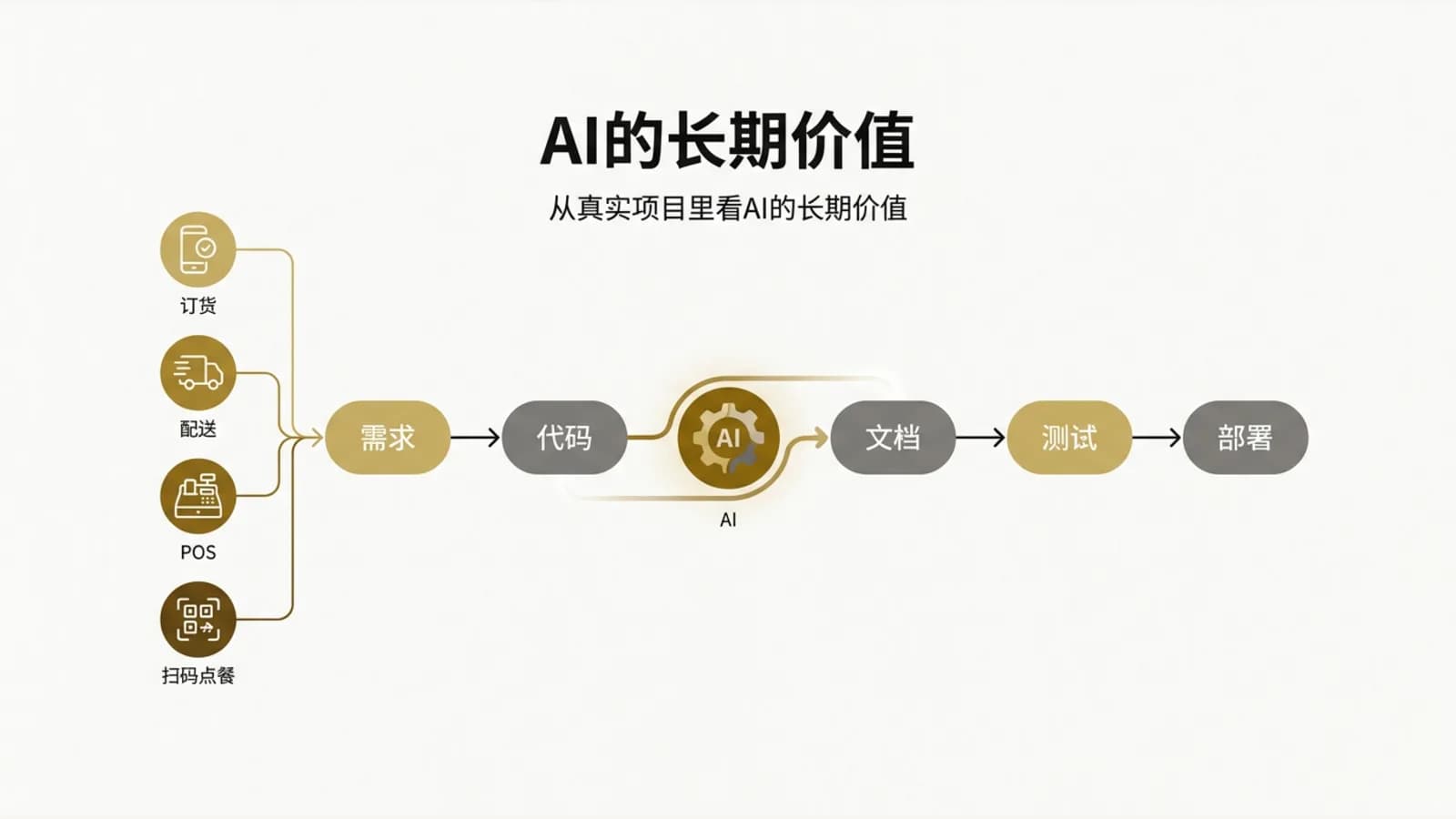
The more I follow what's happening in the AI industry, the more one thing stands out to me: the hype is easy to spot, but the real long-term value usually hides inside concrete, everyday workflows.
I'm now working full-time on my own products and content, and I spend every day working alongside AI agents like Claude, Codex, and Hermes. Since I'm in the trenches rather than watching from the sidelines, my take is pretty hands-on: AI isn't just a "productivity boost" label. It's more like something that pushes what one person can ship way further than before.
Just my personal take, shared for discussion. Not investment advice.
What I actually care about: what problem does AI solve?
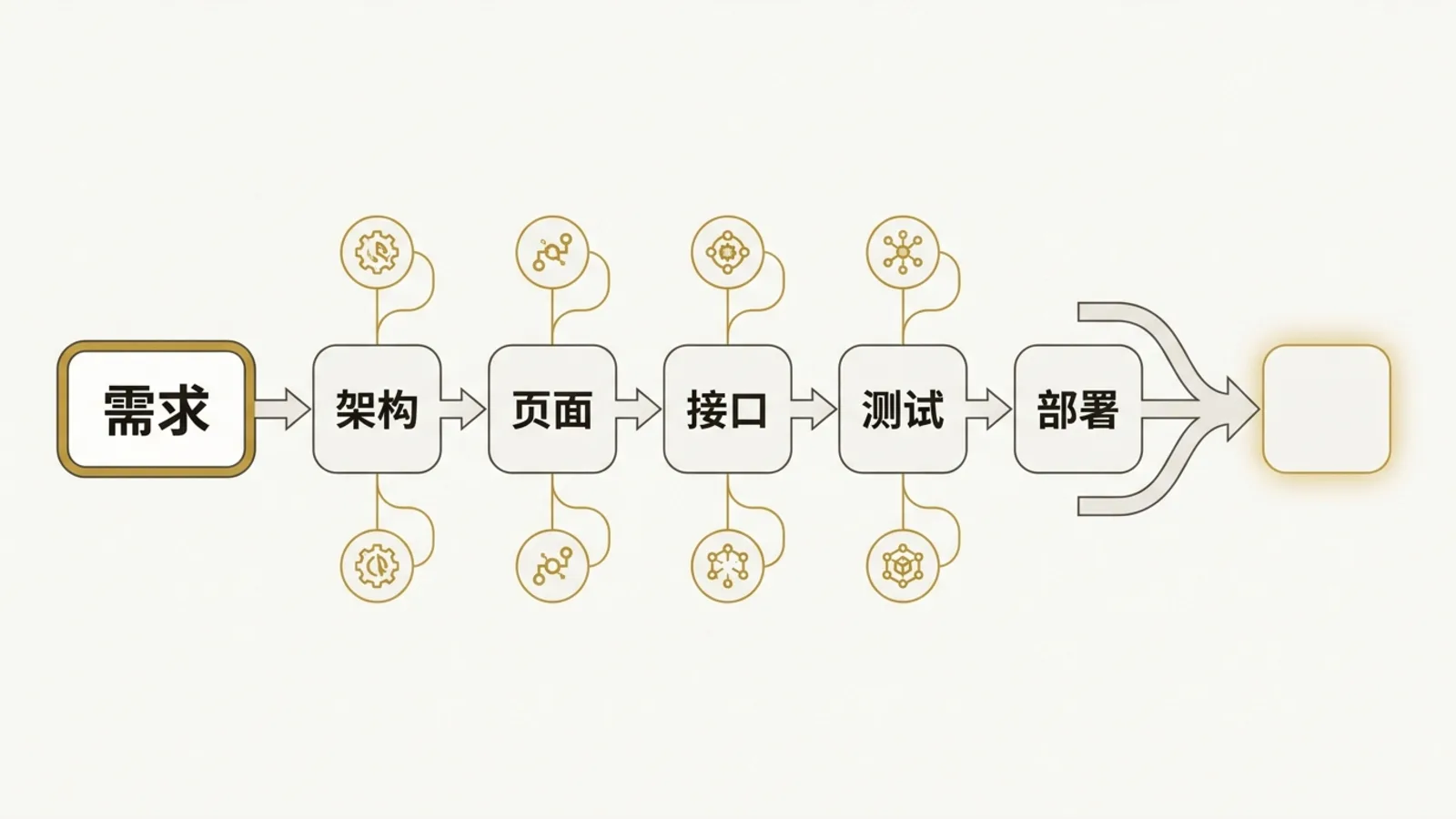
Building a business system solo used to be hard, and the hard part wasn't really writing the code. It was everything around it: requirements, architecture, UI, APIs, testing, deployment, bug fixing, docs. Every one of those steps eats a huge amount of energy.
I felt this clearly while building MakanCloud. It's not a simple website. It's an end-to-end SaaS for F&B businesses in Singapore, covering ordering, central kitchen, delivery, staff scheduling, POS, QR ordering, and more. Where AI helps me isn't just filling in code. It lets me break down problems faster, track down bugs, fill in documentation, and review my own workflows.
That's also my first test when I look at the AI industry: has it actually made it into real workflows, and is it solving problems that used to be expensive, slow, and labor-heavy?
Long-term value isn't the same as short-term hype
There's a new tool, a new model, or a new buzzword in AI pretty much every day. As a developer, of course I get excited, and I try a lot of them. But when I think about it from an investing angle, I remind myself to slow down.
Short-term hype can come from launch events, parameter counts, leaderboards, and funding stories. Long-term value is much more likely to come from consistently shipping. If a product just demos really well but sits far away from real business use, I hold off on judging it. On the other hand, if it genuinely makes things lighter for restaurants, small businesses, internal tools, or data dashboards, that's something I'm happy to keep watching over the long run.
AI amplifies what you can do, and what you're responsible for
I don't want to make AI sound magical. In practice, it writes buggy logic, misreads requirements, and suggests solutions that sound totally reasonable but don't actually fit the business.
So in the end, the responsibility is still on the human. Did you understand the requirements correctly? Does the system actually run? Is the data properly protected? Did you actually solve the customer's real pain point? You can't just shrug any of that off with "well, the AI generated it."
To me, that's the key to the long-term value of AI applications: it's not about who hypes it the loudest, but who can put AI into serious workflows and take responsibility for the results.
The framework I'm using right now
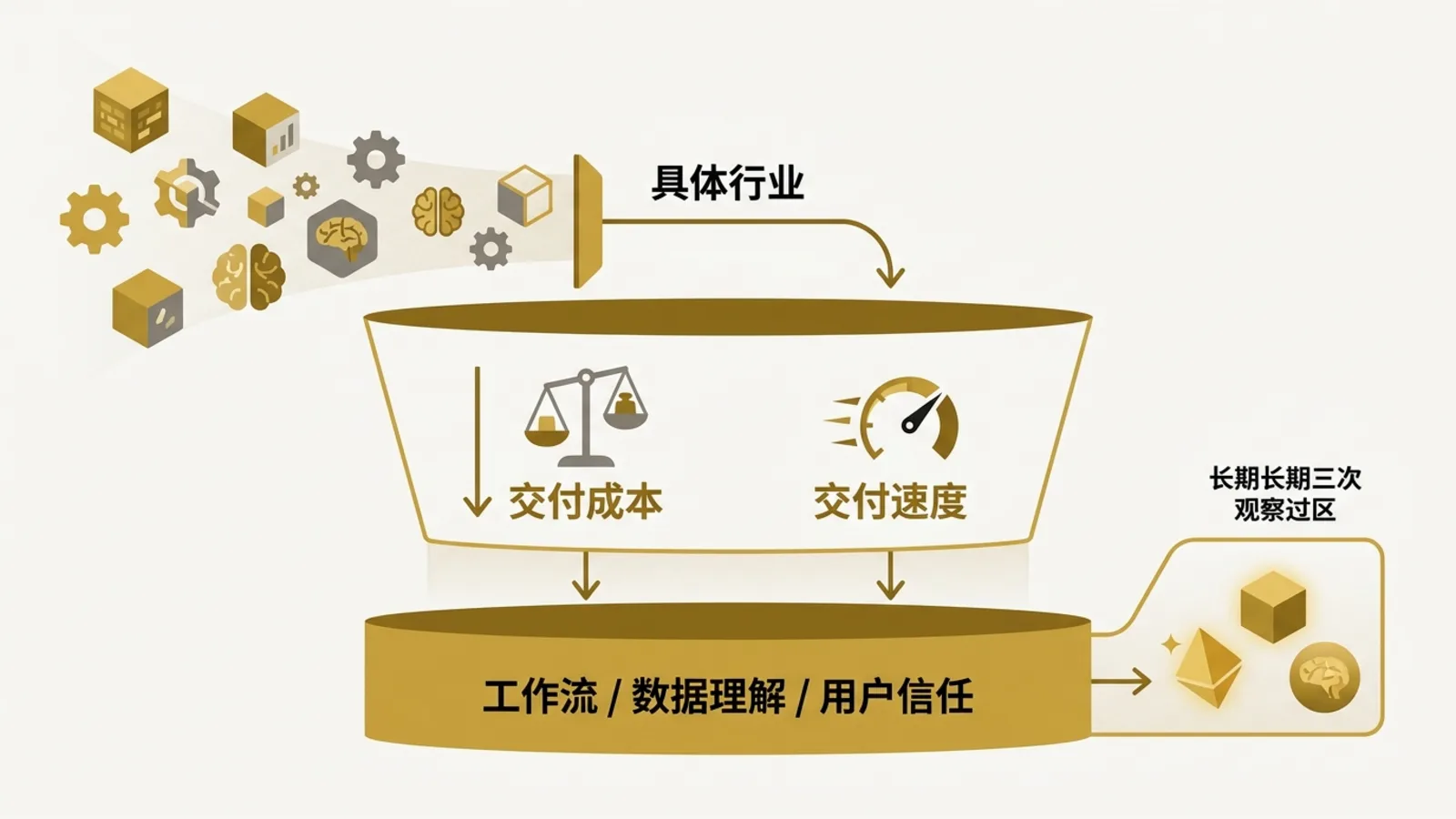
I look at AI opportunities through three questions:
- First, has it made it into a specific industry, or is it stuck at generic demos?
- Second, does it clearly lower the cost of delivery or speed it up?
- Third, can it build long-term compounding advantages, like workflows, understanding of the data, industry know-how, and user trust?
There's no standard answer to any of these, and I'm still refining my thinking as I go. As an indie developer, the value I can offer isn't predicting the market. It's sharing what I see in real projects.
If you're also keeping an eye on the AI industry and long-term value, drop a comment, I'd love to chat. And if you want to see how I use AI to build real products, stick around for the next posts.