I Barely Used AI This Week, and Learned More Anyway

I went back through my last 7 days of AI collaboration logs, and the honest answer was: there weren't any worth mentioning.
AI didn't push a new feature forward. It didn't break down a hard problem. There was no neat story I could turn into an "AI made me faster" case study.
On a normal content schedule, that's a week you'd rather skip. But since I'm building in public, I think it's worth writing up properly.
1. No log is still a data point
For a while now, I've treated AI as a collaborator in my dev process. I use it to organize my thinking, break problems down, sketch first-pass solutions, and catch things I've missed.
This week, though, there's nothing new in the log. I can think of at least two reasons: either I hadn't defined the problem clearly yet, or the work just didn't need AI.
And that matters more than it sounds.
It's easy to think "using AI" means "more advanced," or that "producing output" means "making progress." But real product progress shouldn't be measured by how often you open a tool.
2. AI is best at amplifying clear problems
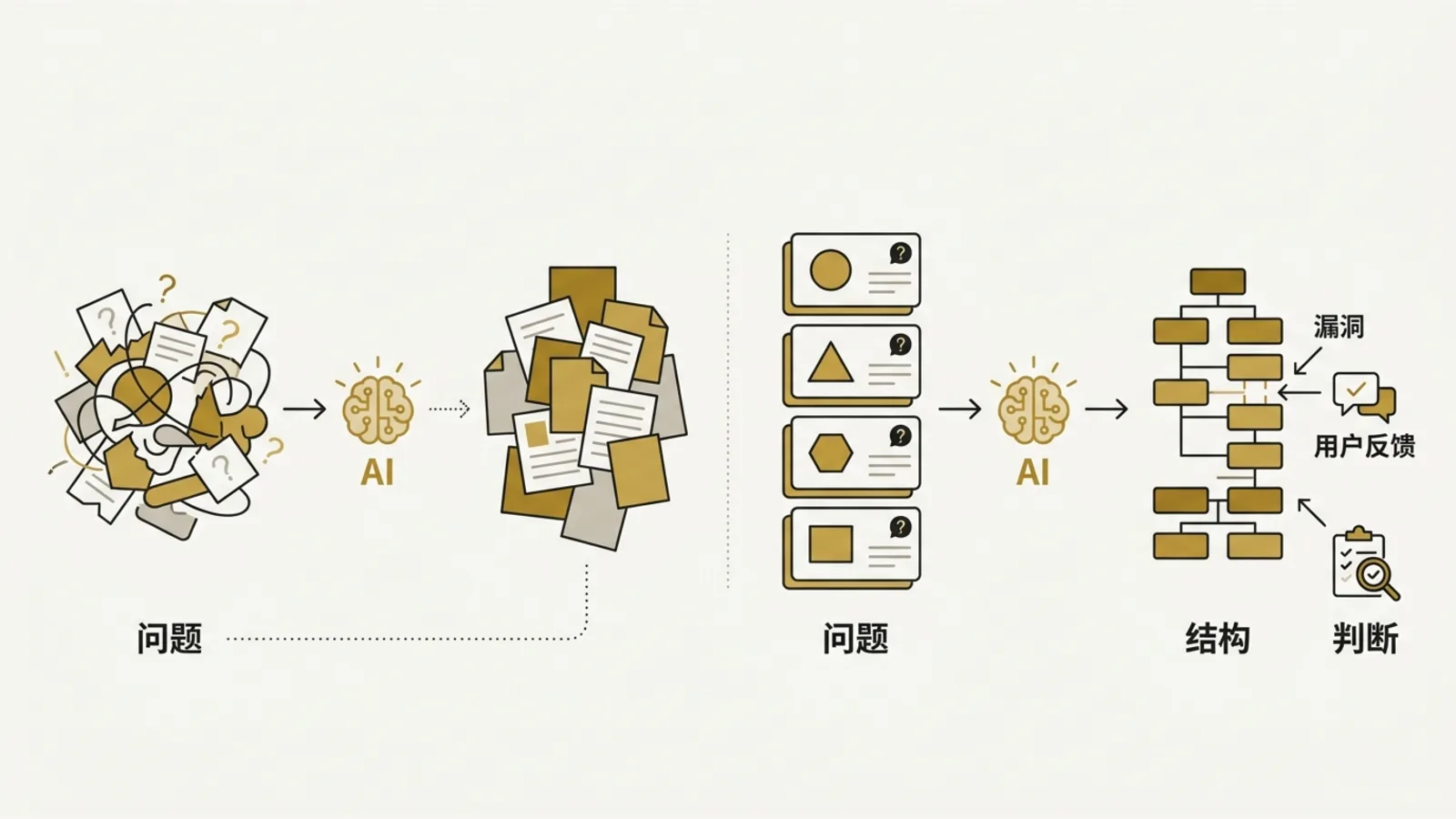
The biggest reminder this week: AI isn't a magic engine that moves things forward by itself. It works more like an amplifier.
When the problem is already clear (summarizing dev notes, comparing a few options, organizing user feedback, tightening up some copy), AI is obviously useful.
But if you haven't figured out the direction yet and you throw the problem at AI anyway, you usually get something that looks complete but doesn't really have any judgment behind it.
These days I'd rather use AI to:
- Turn scattered notes into something with structure
- Spot holes in how I'm explaining things
- Pull a shareable, public version out of material I already have
- Check whether I've missed what users actually care about
But whether to build something, how to prioritize, and which user voices matter most are calls I still have to make myself.
3. Being honest beats a nonstop highlight reel
When you document your work in public, there's a pull to show progress every single week and tell a new "look what I shipped" story every time.
That's not what real development looks like.
Some weeks you write code. Some weeks you fix small bugs. Some weeks you wait for feedback. And some weeks you just let messy ideas sit for a while.
For me, this week's empty AI log is a reminder not to invent progress just to have something to post, and not to force AI into the work just to look productive.
If there's no highlight, I should just say so: no highlights this week, but I got a clearer sense of where the tool's job ends and mine begins.
4. How I'll use AI going forward
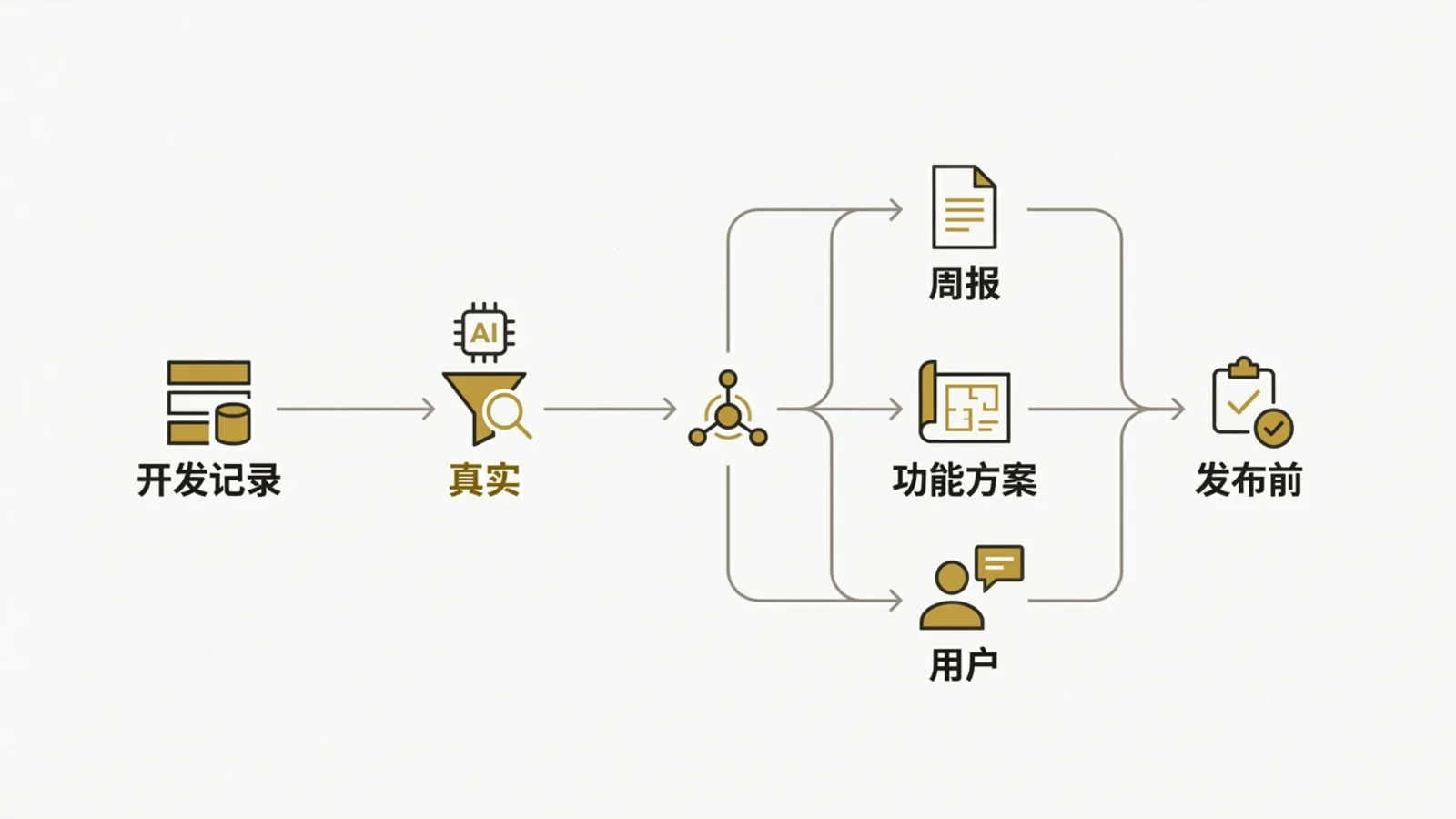
I'm not going to set myself a "use AI every day" target.
Instead, I'll bring AI in once a problem is specific enough.
For example:
- Turning dev notes into a weekly update I can share publicly
- Weighing the tradeoffs between different feature options
- Making user-facing copy clearer
- Checking before I publish for anything overstated, missing, or not quite honest
That's a lot more useful than chasing usage numbers.
One question to leave you with: do you have a steady AI workflow by now, or do you mostly open it when something comes up? Let me know in the comments. I'll keep logging what working with AI actually looks like, including the parts that work and quiet, empty weeks like this one.