Which Internal Tools Are Worth Building Cheaply with AI
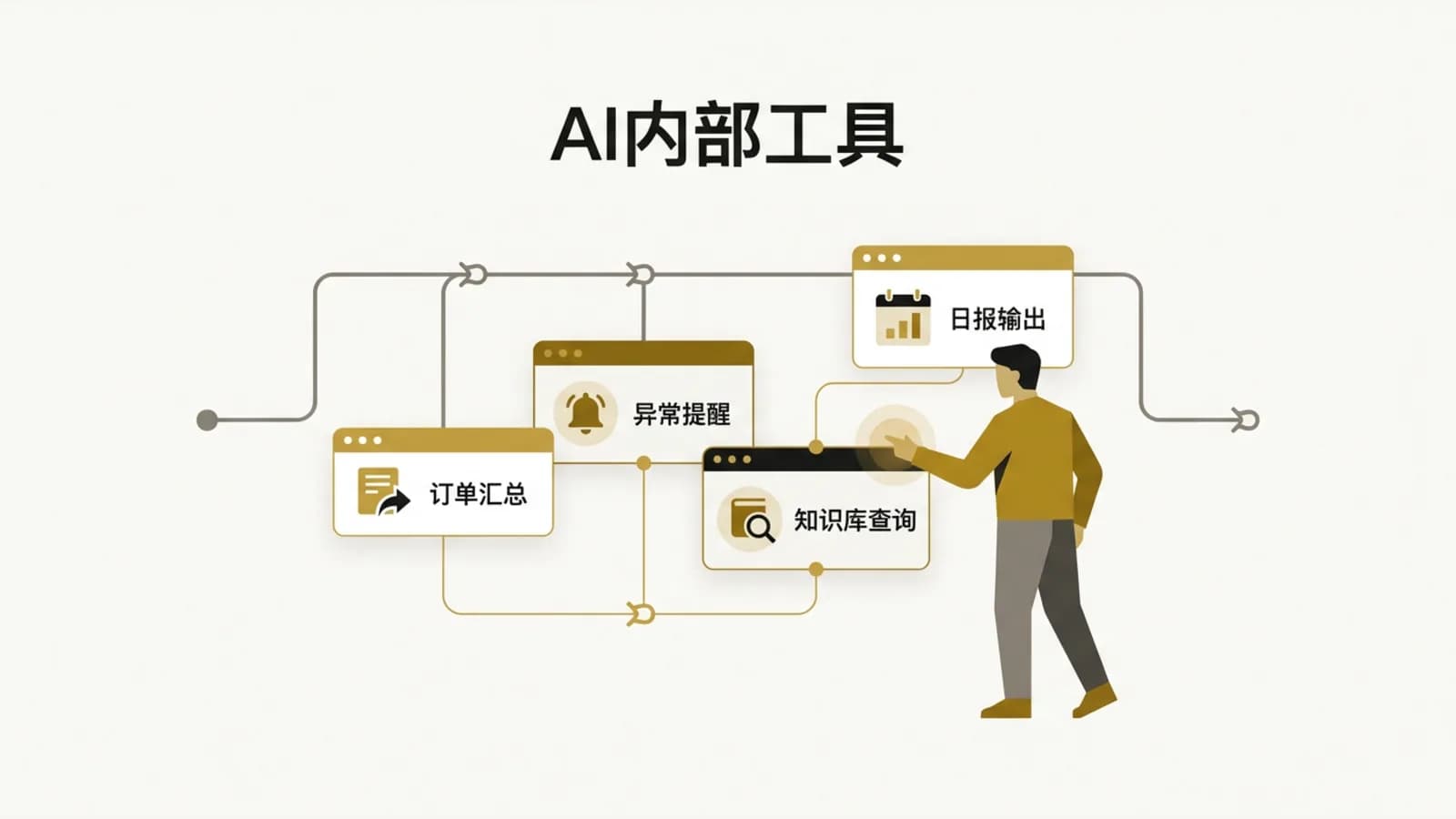
One thing has become clearer to me lately: what a lot of small businesses actually need isn't some big system built from scratch. It's a handful of internal tools that each solve one specific problem.
While building MakanCloud, I keep running into the same kinds of situations: ordering, the central kitchen, delivery, staff scheduling, POS, QR-code ordering. Each one hides a pile of small, fiddly processes. What wears people out usually isn't one flashy feature. It's the small tasks that repeat every single day.
Things like copying data around, cross-checking spreadsheets, pinging coworkers, putting together daily reports, looking up SOPs, and spotting anomalies.
None of these is a big deal on its own. Add them up over months, though, and they turn into real operating costs.
Don't rush into building a big system
When owners or teams hear "custom software," a lot of them assume it'll be expensive, heavy, and slow to deliver.
For a long time, that was usually true. A complete system means product design, frontend and backend work, deployment, and ongoing maintenance, and none of that is cheap.
AI-assisted development has changed things a bit. Building software still costs something. The difference is that a lot of small tools that used to be "not worth building" can now be made in a much lighter way.
Here's how I see it: fixing one clearly defined process beats planning a big platform from day one.
For example, start with a script that rolls up orders automatically, or an alert when a store has an issue, or an assistant that answers questions from your internal knowledge base. Once that works, you can decide whether to build it out further.
Which processes are worth automating
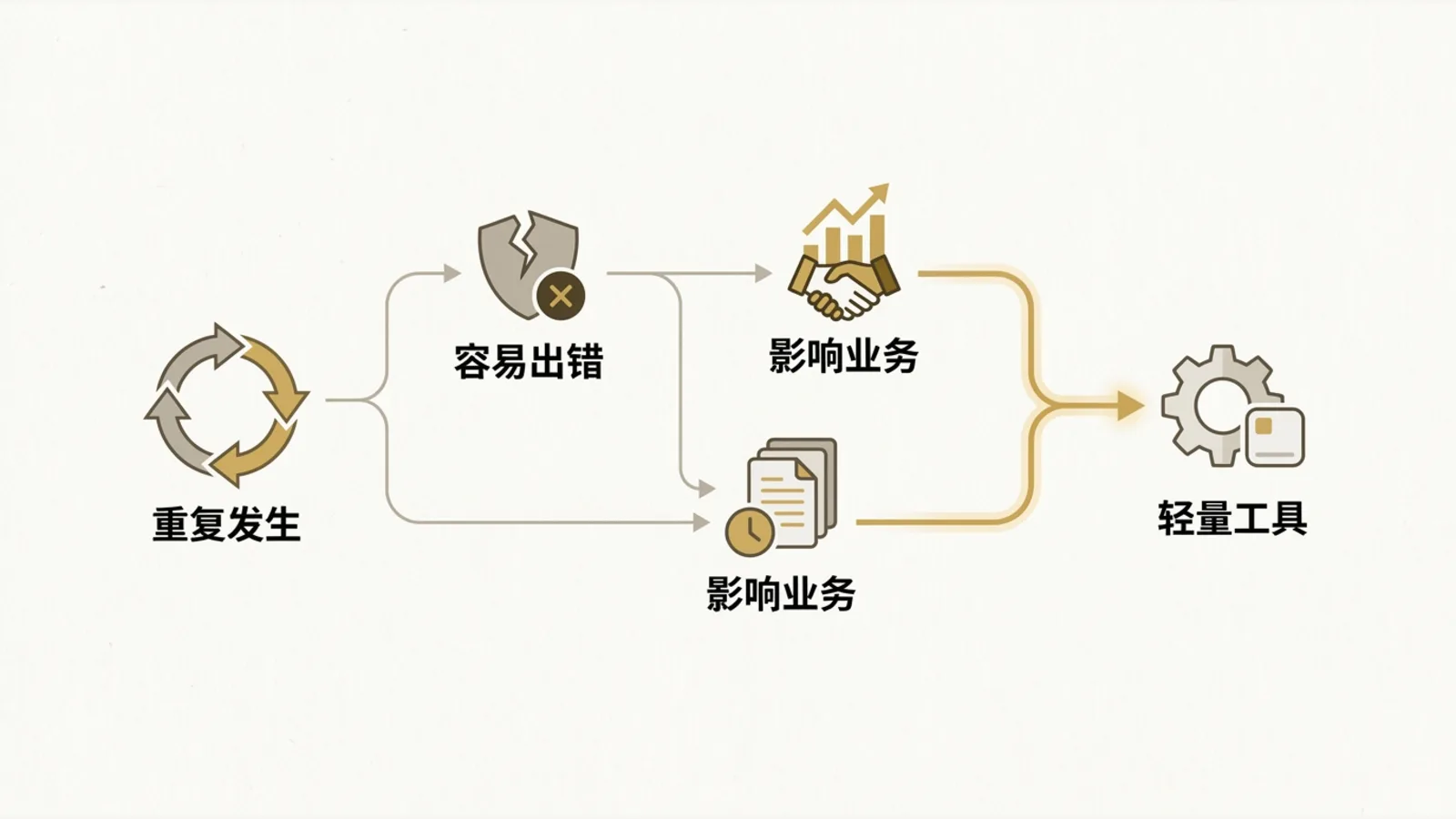
I usually ask three questions:
First, does it happen over and over?
If you do it every week, or even every day, automating it is worth it.
Second, is it easy to get wrong?
Think manual copying, manual checking, manual reformatting. The moment things get busy, stuff slips through.
Third, does a mistake actually hurt the business?
If the only cost is missing one data point, it's not a big deal. But if it affects ordering, inventory, scheduling, or delivery, it deserves real attention.
If a process ticks all three boxes, it's usually a good candidate for a lightweight tool.
The 5 kinds of tools I'd build first
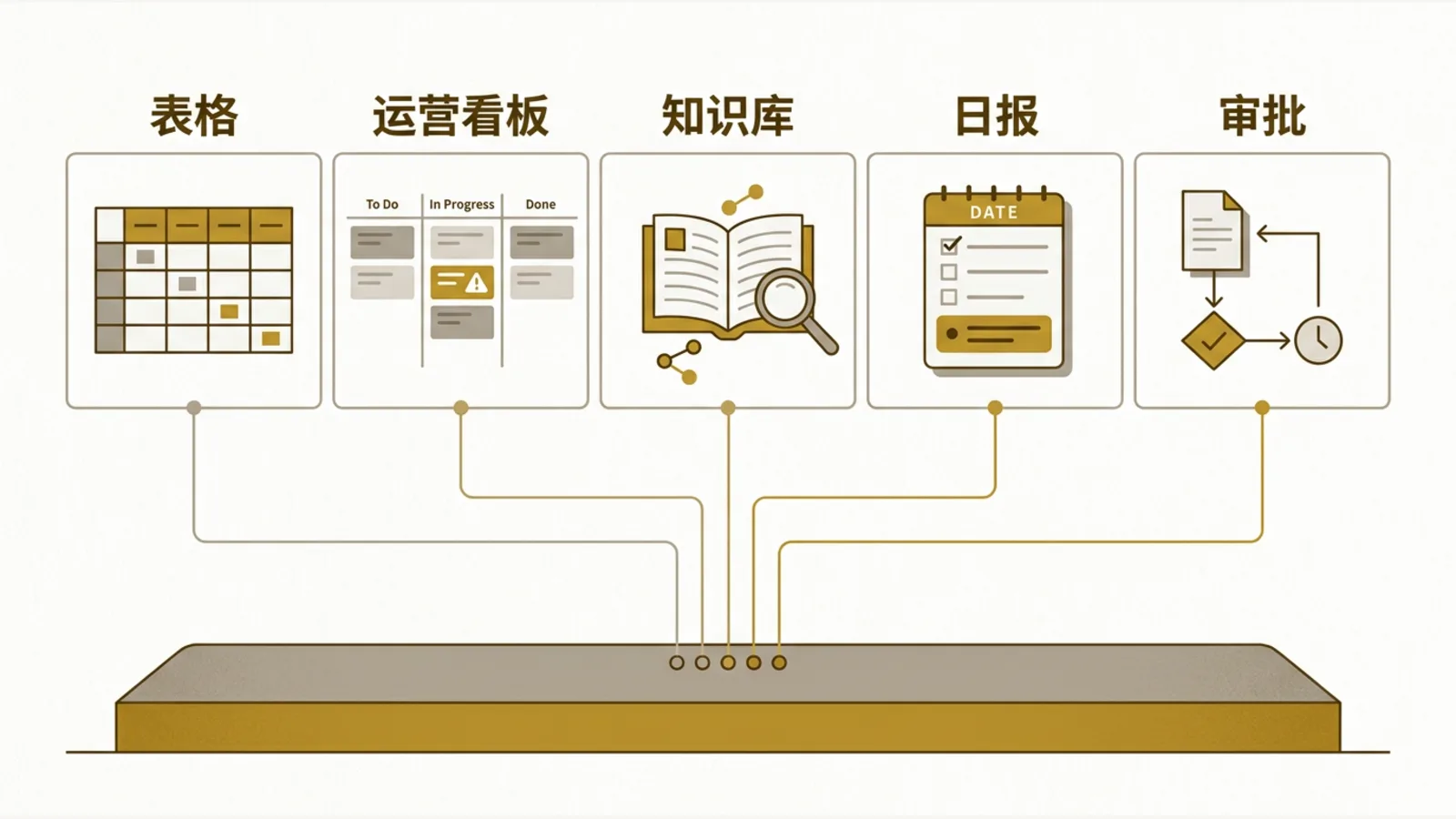
- Spreadsheet cleanup tools
Plenty of businesses have data. The problem is that it's scattered across different spreadsheets, chat threads, and system exports. A small tool can handle the importing, cleaning, categorizing, and summarizing for you.
- Ops dashboards
Small teams don't necessarily need a complex BI setup. Often a simple dashboard is enough: which metrics look off today, which tasks aren't done, which stores need attention.
- Internal knowledge base assistant
Pull your SOPs, training materials, and FAQs together so staff can just ask. The goal isn't an "AI Q&A" feature for its own sake. It's cutting down on answering the same questions over and over.
- Automated daily and weekly reports
This isn't about having AI make things up. It's about pulling the key points out of real data: what happened today, where the problems are, and what to look at next.
- Approvals, reminders, and task workflows
Leave requests, purchasing, repair requests, schedule changes. You don't have to buy a full system for these on day one. Build a lightweight version that tracks status, owners, and reminders, and you'll already cut a lot of back-and-forth.
AI helps, but don't treat it like magic
The way I see it now, AI's biggest value isn't "replacing everyone." It's that turning an idea into a working tool has gotten a lot easier.
One person plus AI can prototype, write code, track down bugs, and fill in docs much faster. But how the business process should work, what shouldn't be automated carelessly, and which data should stay off-limits all still need careful human judgment.
So I'd rather keep this practical:
Not every business needs custom software.
But if you have a process that's been held together by spreadsheets, group chats, and manual reminders for a long time, and it keeps getting harder to manage, it's probably worth turning into a tool.
I'll keep sharing what I learn from using AI to build real products, internal tools, and automated workflows. If you have a specific process and aren't sure whether it's worth automating, leave a comment or DM me. We can start with the simple question: is it worth building at all?